


Exporting Finger Limes: Regulations, Standards, and Global Market Insights

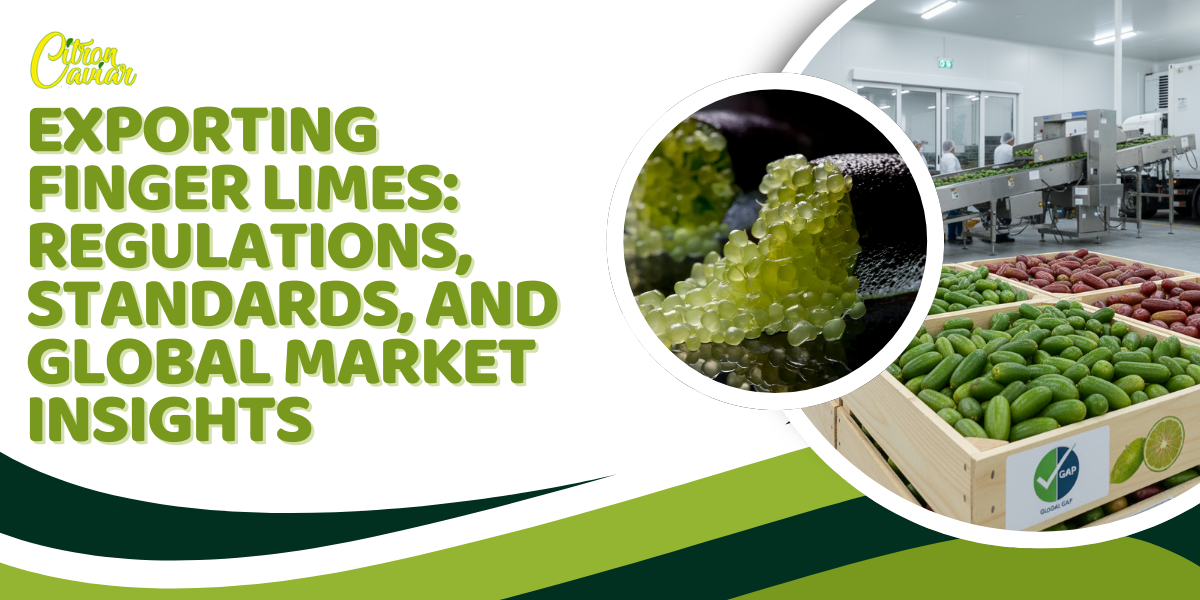
When life gives you lemons, you make lemonade, but when it gives you finger limes? First, you need to explore them and determine where you can obtain them.
For this, you need to understand the regulations surrounding the global market and gain some insights into it as well. Exporting finger limes also requires awareness of the seasonality of finger limes, since their availability directly impacts supply, pricing, and market demand worldwide.
So, let’s talk about all of it in this article.
Exporting Finger Limes - What to Consider?
Now it depends on where you are sending the finger limes. Because, as for now, the importation of fresh citrus fruits is limited in certain countries, including the USA, Japan, and the EU. Fruit flies and other citrus diseases, which are known to exist in Australia, are the main causes of this restriction.
Fruit flies have been observed on native finger limes. However, a few Finger lime fresh varieties show high resistance. To address this, the Australian government is conducting a thorough investigation to provide clarity for importing nations.
Finger limes must currently be imported into Japan as frozen whole fruit, though.
Certain certifications, such as Australian government Black Spot inspections, proof of chemical spray diaries, and minimum residue levels (MRLs) of hazardous chemicals and metals, are required for importation into the EU.
Ultimately, it depends on the country’s established regulations, so always consult the relevant authorities or your vendor.
So, what to consider for finger lime export regulations:
- Phytosanitary Certification
- Residue Compliance
- Packaging and Labelling
- Quarantine Procedures
Finger Lime Export Standards
Exporters can differentiate themselves in highly competitive premium markets by adhering to the standards for finger lime exports. So, they go beyond legal requirements.
Usually, these requirements consist of:
- Uniform Quality: Fruits should have no obvious flaws and be uniform in size, shape, and color.
- Freshness Assurance: Maintaining shelf life and consumer appeal requires cold chain logistics.
- Certification Advantage: In North American and European markets, organic and sustainability certifications greatly increase value.
- Traceability and Transparency: Buyers can verify the legitimacy of produce by tracking it back to the farm using sophisticated tracking systems.
Exporters who fulfill these requirements can often command higher prices and secure long-term agreements with valued customers.
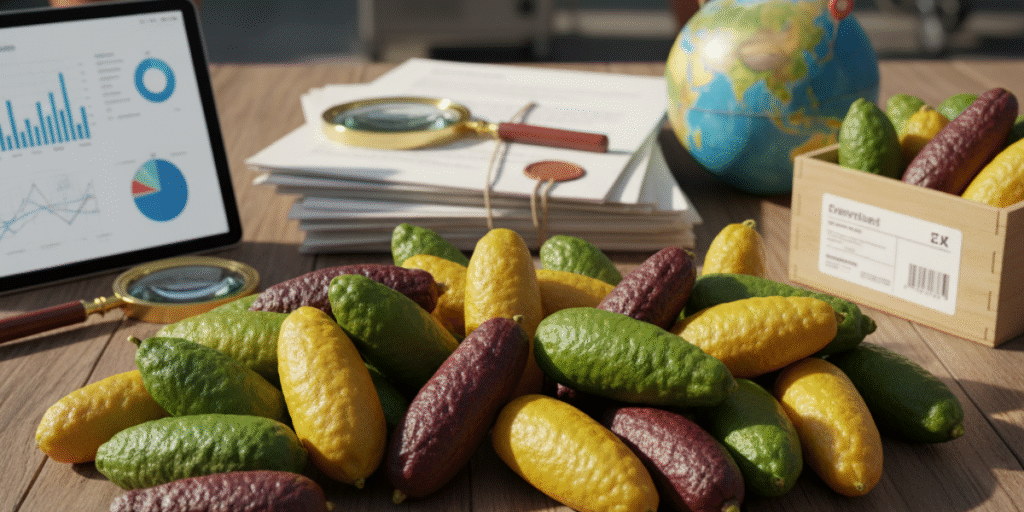
Finger Lime Global Market Insights
The global finger lime market is characterized by increasing demand in various sectors and exclusivity. Chefs in the culinary arts garnish seafood, cocktails, and desserts with finger limes. The fruit's antioxidant-rich profile makes it a desirable ingredient for upscale skincare and nutraceuticals in the wellness and cosmetics industry.
Although production is now spreading to the United States, Spain, and some regions of Asia, Australia still accounts for the majority of exports as the native growing region. Demand is particularly high in the Asia-Pacific region, where there is a growing interest in exotic fruits, and in Europe, where finger limes are actively sought after by boutique stores and gourmet restaurants.
The biggest obstacle to expanding exports is still supply issues. Finger limes are difficult to harvest, have a limited growing area, and are extremely sensitive to environmental factors. Although it limits wider accessibility, this scarcity preserves their premium market positioning.
Opportunities & Challenges of Exporting Finger Limes
Opportunities for exporters are found in value-added goods, such as extracts, syrups, powders, and marmalades, in addition to fresh produce. In the food manufacturing and wellness sectors, these products increase shelf life, lower logistics risks, and open up new markets.
Exporters also face challenges such as the need for consumer education, stringent compliance checks, and high logistics costs. Without fully comprehending their unique qualities, many prospective customers continue to look up where to buy finger limes.
In order to increase future demand and fortify the company's position in the global market, branding initiatives that emphasize finger limes as citrus caviar, a high-end, multipurpose product, will be important.
Can You Grow Finger Limes Outside Australia?
It is possible to grow lime caviar outside of Australia, but only in climates that are suitable for it. They do best in subtropical climates that are warm, humid, and have mild winters.
Today, commercial cultivation is practiced in parts of Southeast Asia, Florida, Spain, and Southern California. They can be cultivated in greenhouses in colder climates. Despite all the limitations, such as slow growth, sensitivity to frost, and susceptibility to citrus diseases, they can thrive outside their natural Australian habitat with the right care.
Conclusion
Understanding what a finger lime is goes beyond its citrus caviar pearls—it’s about recognizing its role in premium cuisine, wellness, and global trade.
With strict regulations and market standards, exporting finger limes demands compliance, quality, and consistency. From chefs to wellness brands, the demand continues to grow, making supply and storage essential factors.
To maintain freshness, always store finger limes under proper cold-chain logistics. As a trusted name, Citron Caviar leads as a global exporter of finger limes and red finger limes, ensuring premium quality for markets worldwide while supporting the fruit’s unique journey from Australia to global tables.
FAQs
Exporting finger limes requires compliance with each country’s phytosanitary rules, residue limits, labeling, and quarantine checks. Countries like the USA, Japan, and the EU impose strict citrus import restrictions, demanding certifications to prevent pests and diseases.
The global finger lime market thrives on exclusivity, with Australia leading the way in exports. Demand is high in the Asia-Pacific and European regions, driven by the gourmet cuisine, wellness, and skincare sectors; however, limited supply keeps finger limes positioned as a premium product.
Exporters must meet strict standards: consistent quality, freshness assurance through cold-chain logistics, proper certifications, and traceability. Additional sustainability and organic certifications can enhance value, enabling exporters to secure premium pricing and establish long-term, international trade relationships.