


History of Finger Limes: From Indigenous Australian Bushfood to Global Gourmet


The one thing people are sure of is that the history of finger limes is that their origin is from Northern New South Wales and Queensland. This is known for the unusual citrus, also known as Citrus australasica, which is native.
For thousands of years, indigenous Australian communities, including the Bundjalung, Gumbainggir, Wakka Wakka, and Barunggam nations, have used the finger lime as bush food. They have eaten the fruit raw, added its acidic pearls to seafood, and used parts of the plant as medicine.
With vesicles that explode in the mouth, the pulp of the wild finger lime, which grows as an understory shrub in subtropical rainforests, has a remarkable caviar-like texture. Indigenous groups collected it seasonally for food, hydrating drinks, skin wound antiseptics, and illness prevention.
Although commercial cultivation is relatively new, the fruit was first described by European settlers in the 19th and early 20th centuries.
Some wild populations were in danger due to landscape changes, but wild stock selections survived and served as the foundation for subsequent commercial plantings.
How did it come from native Australians to the global choice of chefs? Let’s find out.
From Bush Tucker to Boutique Farms - Finger Limes Just Got Commercialization
Gourmet chefs and specialty food markets now value the finger lime, which was once a local finger lime bush food that was foraged. Boutique marmalades and artisan preserves made from fruit that was harvested from the wild started to appear by the mid-1990s.
Cultivation spread: scientists and farmers created cultivars with different pulp colors, a range of colors (green, pink, red, and yellow), and specific characteristics like yield, size, and flavor. The fruit's distinctive "pearls," also known as "lime caviar," became a distinguishing characteristic.
There are now finger lime orchards in the United States as well as Australia, especially in states with mild subtropical or Mediterranean climates (like California and Florida), where some farms grow finger limes to meet local gourmet demand.
Finger Lime Global Gourmet: Culinary Fame & Food Culture
Finger limes have gained popularity in gourmet cuisine as people around the world become more adventurous with their taste. They are valued by chefs for their texture, accent, and garnish.
They use their burst-of-citrus pearls in salads, cocktails, seafood, sushi, ceviche, and even desserts. Visual drama is added by their vivid pulp and skin colors.
In addition to taste, people are interested in the health advantages. Rich in vitamin C, antioxidants, and acids (citric, malic, etc.), Indigenous peoples have utilized them medicinally, for skin care, immune system stimulation, and other purposes, in addition to for flavor.
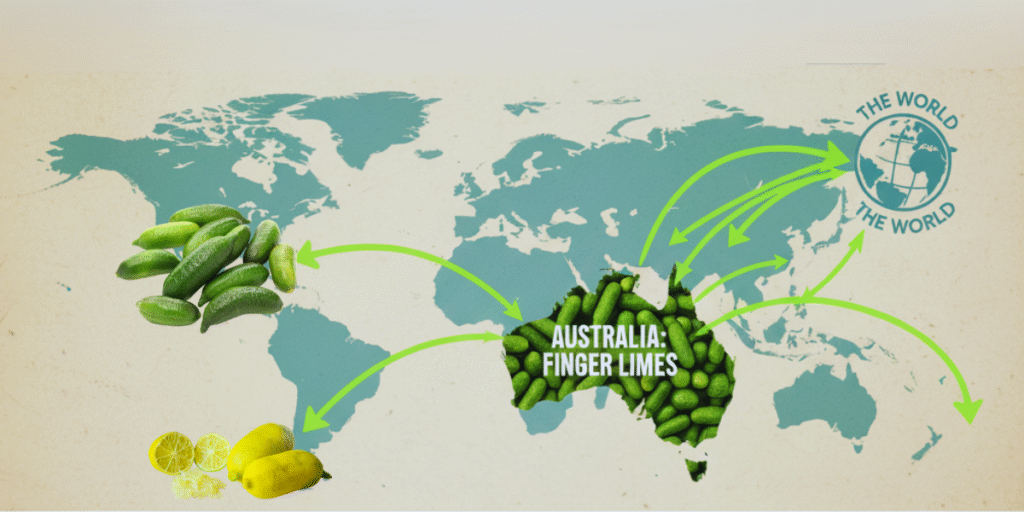
Today’s Market: Where Can You Buy Finger Limes?
There are a few places in the USA where you can purchase finger limes:
- Specialty Produce Stores: finger limes are frequently available at specialty produce stores when they're in season.
- Online: Finger limes are sold online by farms such as Dickinson Family Farms, Melissa's Produce, and online stores like Citron Caviar; they are frequently shipped either frozen or fresh.
- Farms: Harpke Family Farm in Florida, for instance, grows finger limes commercially and sells them locally to markets and chefs.
Finger Limes in the USA: Cultivation and Availability
In the US, finger limes are becoming more and more popular. Trials started after germplasm (budwood donated by Dr Joe Furr) was transferred from Australia in the middle of the 1960s.
Some growers use citrus rootstocks that are climate-adapted to graft finger lime cultivars.
Cultivation is possible in areas such as Florida, Southern California, and portions of the Gulf Coast.
Price points are usually higher than those of common citrus because the fruit is delicate and its market is small. Seasonality and gourmet markets are frequently associated with availability.
Genetic Diversity, Conservation, and Cultural Respect
Genetic variation is a significant aspect of the history of finger limes. Skin color, pulp, seed content, shape, and size vary among wild populations. These wild characteristics are useful for breeding, both for disease resistance and for new flavor/color cultivars.
However, since land development and deforestation can endanger wild trees, wild habitats must be conserved.
A deeper understanding of the indigenous Australian finger lime goes beyond its exotic appeal thanks to cultural custodians' preservation of traditional names (such as Gulalung in Bundjalung Country), harvesting methods, and medicinal applications. Indigenous knowledge remains crucial.
Conclusion
The history of finger limes reflects a journey from ancient bushfood traditions to becoming a prized gourmet ingredient worldwide.
Indigenous Australians first enjoyed their medicinal and culinary benefits, and today, chefs value them for their burst of citrus pearls. From vibrant Red Finger Limes to other premium finger lime varieties, this fruit is now cultivated beyond Australia.
Leading the way, Citron Caviar, a trusted exporter of finger limes, delivers these exotic citrus treasures to kitchens and markets around the globe. Their efforts ensure that finger limes remain both a cultural legacy and a global culinary sensation.
FAQs
Finger limes originate from Northern New South Wales and Queensland rainforests. Indigenous Australians harvested them for thousands of years as food and medicine, before European settlers documented their use in the 19th century.
Indigenous communities ate finger limes raw, added acidic pearls to seafood, and used parts of the plant medicinally for skin wounds and illness prevention. They also valued them for hydration and seasonal nourishment.
Finger limes entered gourmet markets in the 1990s through boutique marmalades and preserves. Chefs embraced their unique “lime caviar” texture, leading to international cultivation, high-end culinary demand, and global recognition as a luxury fruit.